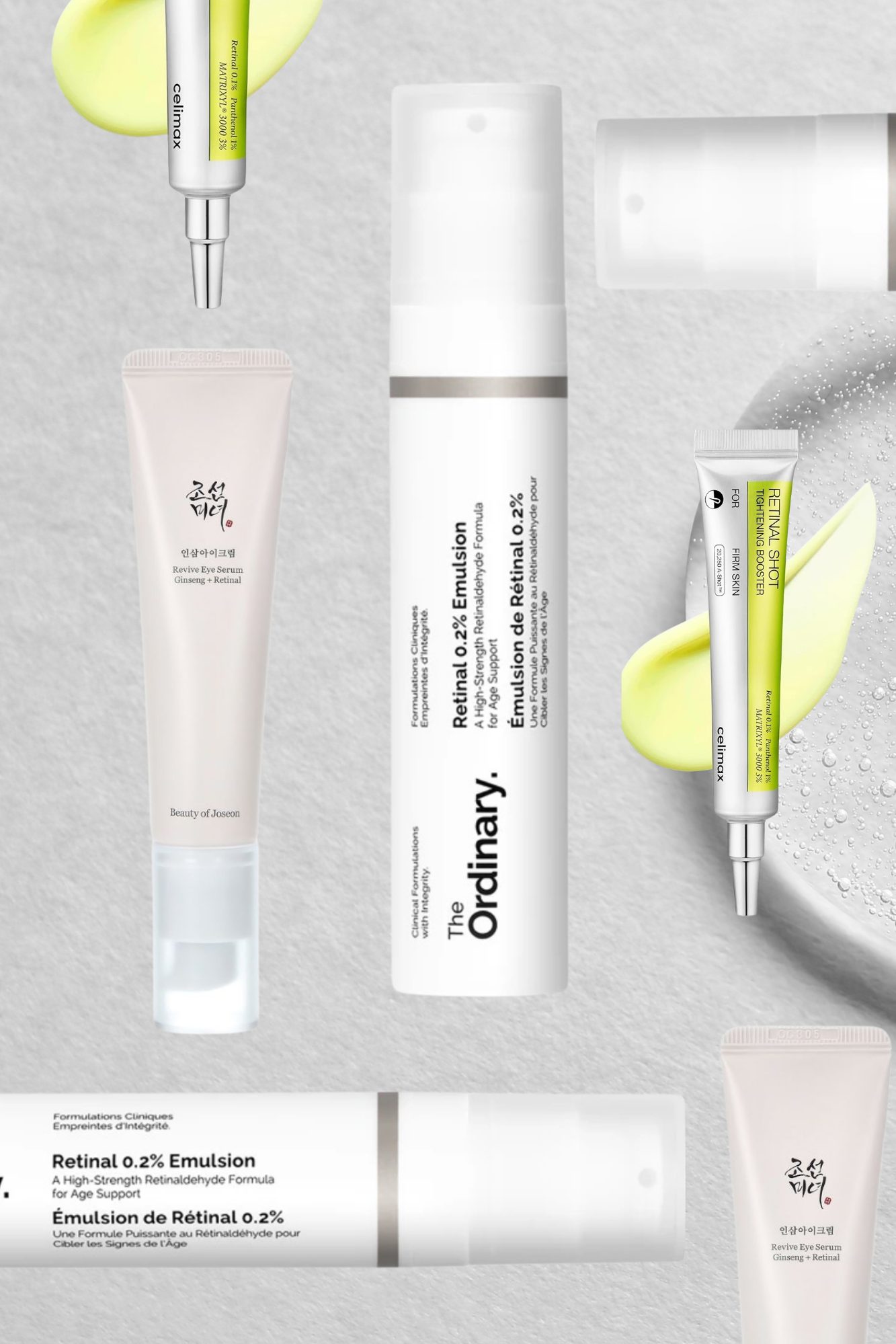

K-beauty vs. Pharmacy

I believe there are two fundamental reasons why this industry has boomed in Romania. Don’t worry, I’m not here to tear down the K-Beauty phenomenon; it has its merits and it helps us out under certain circumstances.

The First Reason

The first and most important reason why women have adopted it into their routines, from what I’ve observed, is that it comes as a “safe,” “clean” alternative to pharmacy products, while being more accessible than organic, sustainable, or ethical brands. It enters the scene with a heavy focus on the skin’s natural protective barrier, without being associated with the ingredients perceived as harsh in pharmacy products.

The Second Reason

The second reason is, without a doubt, the association with images of the glass-skin Korean complexion: perfect, flawless, poreless. A lot of emphasis—perhaps far too much—is placed on this obsession with small, perfect pores.

This is biologically impossible, because our body carries out essential functions through our pores, such as thermoregulation, natural emollience via the skin’s sebum, and sweating.

I am not demonizing the cult of K-Beauty, but it did come packed with a pressure for flawless skin that is heavy for women to carry on their shoulders.

How Do These Products Actually Help Us, Though?

I recommend them in situations where the skin is prone to redness and dryness. They are exceptional for hydration, great when it comes to SPFs, and wonderful for strengthening the skin’s natural protective barrier.

However, they are insufficient for addressing problematic skin, and they can even become dangerous when we look at various exfoliating pads, which are incredibly easy to overuse.

This is exactly where dermocosmetics and pharmacy products come into play—products that are so often demonized, yet remain essential for problematic skin.

I use products based on the specific situation at hand and combine them so that the skin gets the health it needs, leaving the women sitting in front of me happy with the results achieved.

The way I build these skincare routines is simple, ensuring that skin health doesn’t demand time that women just don’t have, which could otherwise cause them to give up on their routine entirely.

Recommendation

I’m leaving two of my favorite K-Beauty products below, both featuring a probiotic role for the skin to help it through these cold days. They can be used both morning and evening, right after washing your face.

Manyo

Haruharu

A Conversation About Blackheads

Very few women have not told me that they want their blackheads to disappear or that they would like to get rid of them at home.

Blackheads do exist – I can tell you that for sure, because I’ve had them for as long as I can remember – but what I actually see on many women’s skin isn’t exactly blackheads. Often, it is just impurities that aren’t exfoliating properly and end up trapped at the base of the hair follicle.

I always say that these blackheads are a normal occurrence for women living in a polluted urban environment, but I completely understand why you don’t like them.

These bothersome blackheads most often appear due to insufficient or unsuitable home care. We sometimes fear hydration, even though it plays an incredibly vital role in the skin’s natural exfoliation process.

An Example

Take dry skin, for instance: its natural hydration is already low. If you don’t apply products that properly hydrate and exfoliate for your specific skin type, your pores will look congested — it is inevitable.

Oily skin types, if they lack a control mechanism, also develop blackheads, especially since oxidized sebum darkens them. Unfortunately, many people believe that skipping moisturizer can reduce sebum, but the effect is exactly the opposite: the skin produces even more sebum to compensate for the dryness.

Our skin is just like a child: it reacts when it doesn’t receive the necessary attention, whether we are busy with work or chores at home. And just like a child, it sends us signals that something is wrong — and these signals need to be addressed.

Blackheads can appear on any skin type that isn’t properly cared for.

What makes matters worse is the automatic association of blackheads with oily skin. Then, using products meant for oily skin on a dry complexion only dries it out further, leading to congestion.

There are many instances where blackheads are not the result of oily skin. I often see them directly linked to using the wrong products for your skin type.

Let me confess something: I have spoken many times about SVR Sebiaclear, a product designed for oily skin. Last week, a client told me that after using it, her face turned very red.

It wasn’t because the product isn’t good, but because it wasn’t right for her skin’s current needs. She has sensitized skin with a compromised skin barrier. SVR contains active ingredients like salicylic acid, zinc, and gluconolactone — applying them to irritated skin is like putting rubbing alcohol on an open wound.

Recommendations

Many recommendations found on the internet require our caution. Self-diagnosis and self-treatment, and not just in skincare, lead to a worsening of the situation in 99% of cases. And I’m not saying you are to blame — we all do it, including myself, as I recommended this product for congestion. You saw congestion on your face and tried to fix it on your own.

It is not your fault that you don’t know all the nuances of the skin — just as I wouldn’t know the ins and outs of your profession, in which you are so highly competent.

This is why I encourage you to seek the help of a specialist. Even if it seems like the more expensive route initially, in reality, it is the most affordable and fastest way to achieve great results.

Programs for You

While last year the GLOW at HOME program was only available online and only on Fridays, from 2026 I have introduced an in-studio version: GLOW in the STUDIO.

During this 60-minute session, you will leave with a completely customized skincare routine, tailored to your skin type and the rhythm of your life.

Of course, there is also the option where we combine the skincare routine with a professional cleansing treatment: GLOW & RESET.

Alexandra.

Today we are talking about OVERDOSING on active ingredients

What does overdosing mean?

It means using too many potent active ingredients (retinol, AHA/BHA acids, concentrated vitamin C, high-dose niacinamide, etc.) within the same routine. Your skin gets bombarded and simply cannot cope anymore. It’s not about how much product you apply, but rather the strength and the sheer number of actives you are stacking.

It is not your fault. Marketing and FOMO constantly push us toward the “more = better” mindset.

A real-life example:

My client “A” was using a good brand (Allies of Skin), but it was way too strong for her skin type. She was layering multiple products with actives and ended up with highly enlarged pores and sebaceous filaments.

How do you know if your skin is oversaturated?

    • Pores suddenly become much more visible

    • Skin produces more sebum (it looks oily, yet feels dehydrated)
    • Sebaceous filaments appear on the nose and cheeks
    • Sensitivity, redness, or a stinging sensation
    • Skin looks dull, rough, and lacks radiance
    • Products that used to work fine now cause irritation
    • Tiny breakouts, but not actual acne

    If you check 3 or more of these boxes, it is highly likely that your skin is oversaturated.

    What is actually happening inside your skin?

    Imagine a child who isn’t getting enough quality time, or a puppy/kitten that feels neglected. What do they do? They start acting up until you finally pay attention to them.

    That is exactly how your skin behaves when it is oversaturated.

    It sends you distress signals (enlarged pores, excess sebum, sensitivity), but we misinterpret them and pile on even more actives. The result? The skin barrier weakens, the skin dehydrates, produces even more sebum, and we enter a vicious cycle.

    It’s not oily skin. It’s not acne. It’s stressed skin begging for balance.

    What I recommend in these cases: drastically cut back on strong actives, use at most a single gentle active that your skin tolerates well, and first rebuild deep hydration and your skin barrier.

    A simple, gentle approach is the most elegant one over the long term.

    Skincare is a MARATHON, not a SPRINT.

    Now tell me… Do you recognize yourself in any of the signs above? Do you feel like your skin is currently oversaturated?

    What Is Retinol and What You Need to Know Before You Start Using It

    Retinol is considered the gold standard in anti-aging skincare — but how do you introduce it correctly into your routine? Alexandra Tătar, skin health mentor, explains everything you need to know before you get started.


    What Exactly Is Retinol?


    “Retinoid” is an umbrella term that includes all topical vitamin A derivatives — whether available over-the-counter or via medical prescription.

    Retinol is a part of this family. And when it comes to documented benefits, the research is vast and clear: it helps reduce fine lines and wrinkles, supports natural collagen production, treats acne, and contributes to the health of the skin’s deeper layers. It is, without exaggeration, one of the few skincare ingredients backed by rock-solid evidence.

    I call it the queen’s crown. And the queen, in any skincare routine, remains SPF. The two always go hand in hand.


    Why Women Fear Retinol — and What Is Actually True About It

    Just the other day, a client asked me if retinol can be used during the summer. My answer was: yes, of course.

    The most common fear is related to photosensitivity — retinol makes the skin more sensitive to the sun, which can increase the risk of hyperpigmentation. This fear has a real foundation. But most of the time, the problem isn’t the retinol itself, but rather insufficient sun protection.


    Here is what often happens: the morning flies by quickly — especially if you are a mother. You want to shorten your routine, you choose a tinted sunscreen to get a bit of natural color, but you apply too little of it so you don’t look “caked on.” The result: insufficient sun protection, not a problem caused by retinol.

    The only situation where I pause retinol use is when I know I will be deliberately exposed to the sun — a beach vacation, for example. For everyday urban life, it remains a must-have ingredient in my routine.

    Skincare Is a Marathon, Not a Sprint

    Retinol works over the long term. Results do not happen overnight, nor should they be the criteria by which you evaluate it in the first few weeks.

    What matters is that you integrate it correctly, protect your skin, and build a sustainable routine — not one that exhausts you or causes you anxiety.

    If you feel you need personalized guidance to introduce retinol into your routine, I have prepared a detailed guide on how to use it — covering everything from concentrations to application order and common mistakes.